Centre of Excellence in Water-Based Early-Warning Systems for Health protection.

As pioneers of WBE we are fully aware of the acute conceptual and technological challenges that are preventing this rapidly developing area from reaching its full potential – to transform public health surveillance globally. Current wastewater monitoring tools, as shown during the COVID pandemics, are laborious, laboratory based, focus on a small subset of biomarkers with results slowly communicated to decisionmakers costing crucial time (often several days) in a pandemic. Lack of holistic thinking encompassing better understanding of human – environment interactions, further hampers our ability for agile responses to arising public health and wider sustainability threats.


To unlock the full potential of wastewater we will develop, with critical input from regional / national stakeholders, the first One Health Platform (One Health Observatory) encompassing WBE systems, sensing technologies and efficient modelling workflows to gather data and monitor environmental and public health, including disease emergence and dynamics via continuous, spatiotemporal multi-residue biomarker tracking.

Our vision

Managing outbreaks of disease currently relies on large-scale and costly mass testing of individuals. Collection and processing take several days – crucial time in fast-moving outbreaks.

Covid-19 highlighted successful outbreak management is critically dependent on real-time, cost-effective and comprehensive surveillance systems, that allow community-wide testing, irrespective of location.

Wastewater contains a complex mix of biomarkers, including toxic chemicals and pathogens. This provides a diagnostic medium for community health status assessment, giving detailed real-time, anonymous and low-cost information on population health and disease.

We aim to transform public and environmental health management, establishing the first Urban Living Lab facility; a state-of-the-art digital water sensing platform, training base and ideas hub. The centre will combine sensing, mathematical modelling, data analytics and informatics with epidemiology and public engagement tools.

Our Ambition

We will work with regional and national stakeholders to provide a practical roadmap for a UK early-warning system platform. This platform will allow us to test public health and environmental interventions focussed on increasing community resilience to disease, pollution and climate change impacts.

We will realise our ambitions by:

  • Investing in bespoke research infrastructure, providing a research base for the Urban Living Lab facility
  • Upskilling and diversifying our research teams
  • Establishing a Doctoral Training Partnership to develop new skill sets and future leaders
  • Building relationships with regional, national and international partners
  • Delivering research that covers biomarker discovery for public health, new analytical pipelines and sensing approaches, one-health frameworks, modelling, and Internet-of-Water (IoW) platforms
  • Working with partners in health, environment and technology to deliver impact and engage the public.

Working with partners in health, environment and technology to deliver impact and engage the public.

Who we are

The new Centre of Excellence in Water-Based Early-Warning Systems for Health Protection (CWBE) has been established with £8.4m of funding from Research England’s Expanding Excellence in England (E3) grant. Together with contributions from the University of Bath and partners, the full cost of the project will total £13 million. 

Our nascent team has pioneered WBE research since 2010 to become an international player with strong collaborative industry, government and community links. Our interdisciplinary and cross-faculty Centre of Excellence has 11 academics from 3 faculties and 7 departments, providing the breadth and depth of WBE expertise required to deliver societal impact. 

Five post doctoral research associates, four prize fellow positions and a doctoral training partnership, with over 13 PhD studentships will be created through the project, increasing the skills and expertise base while diversifying talent.

Meet the team

Professor Barbara Kasprzyk-Hordern (Director)

(WBE/physical sciences lead) Department of Chemistry

LinkedIn

Professor Julie Barnett

(Social sciences lead) Department of Psychology

LinkedIn

Professor Pedro Estrela

(Sensing/engineering) Department of Electronic and Electrical Engineering

LinkedIn

Professor Julian Faraway

(Mathematics/modelling) Department of Mathematical Sciences

LinkedIn
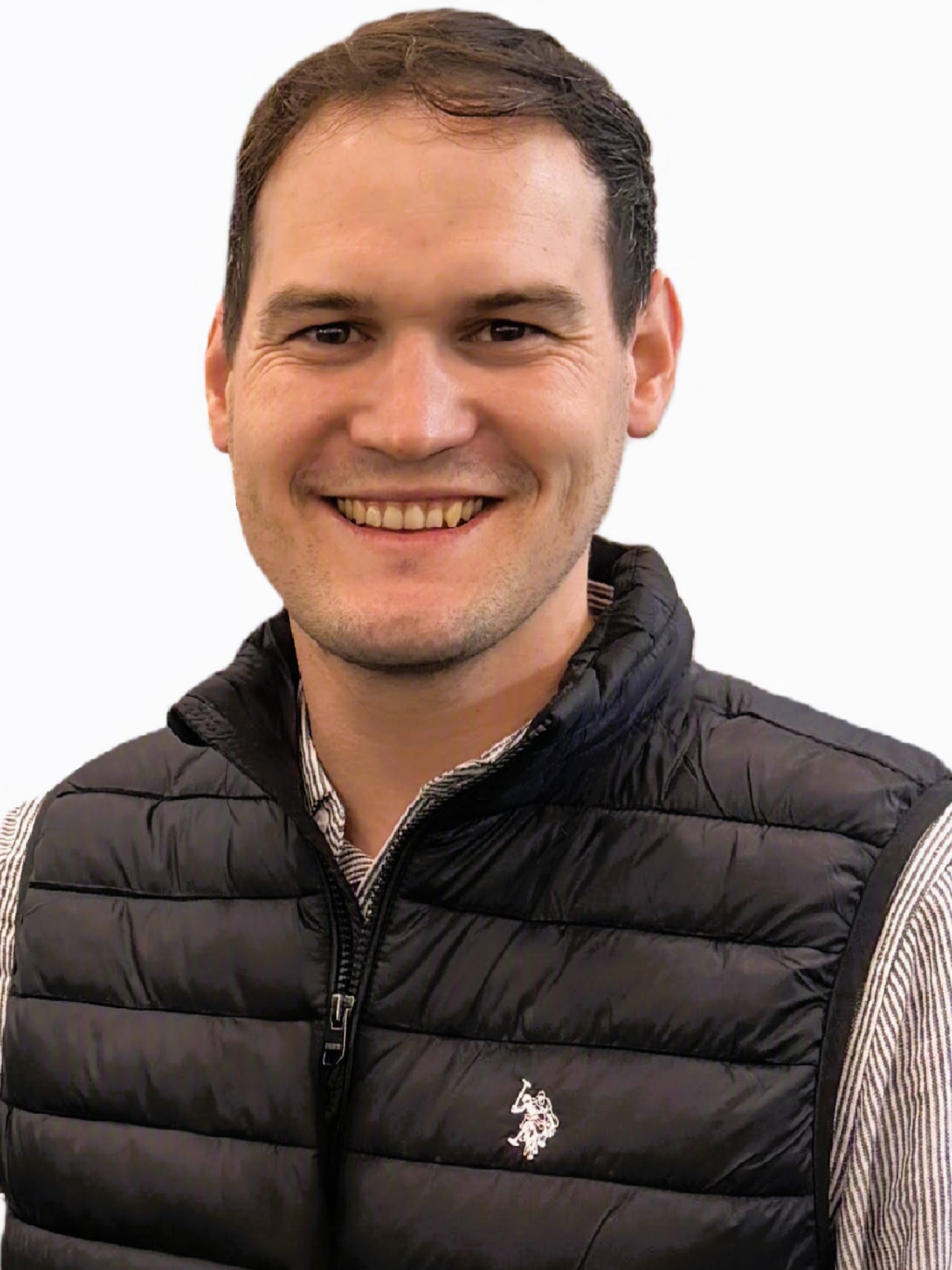
Professor Ed Feil

(Microbiology/pathogens) Department of Life Sciences

LinkedIn

Professor Jan Hofman

Department of Chemical Engineering

LinkedIn

Dr Thomas Kjeldsen

Department of Architecture and Civil Engineering

LinkedIn

Professor Mirella Di Lorenzo

Department of Chemical Engineering

LinkedIn

Dr Benjamin Metcalfe

Department of Electronic and Electrical Engineering

LinkedIn

Dr Despina Moschou

Department of Electronic and Electrical Engineering

LinkedIn

Dr Theresa Smith

Department of Mathematical Sciences

LinkedIn

Helena Lake

Centre Manager

LinkedIn

Dr Mahmoud Altahan

Department of Electronic and Electrical Engineering

LinkedIn

Dr Rachel Carrington

Department of Mathematical Sciences

LinkedIn

Dr Nicola Ceolotto

Department of Chemistry

LinkedIn

Dr Muhammad Dangana

Department of Electronic and Electrical Engineering

LinkedIn

Dr Andrea Estévez Danta

Department of Chemistry

LinkedIn

Dr Samia Habib

Department of Life Sciences

Dr Kishore Jagadeesan

Department of Chemistry

LinkedIn

Dr Tolulope Lawrence

Department of Chemistry

Dr Emma Vaughan

Department of Chemistry

Joseph Beaney

Department of Chemistry

LinkedIn

Isobel Brooker

Department of Life Sciences

LinkedIn

Neil Byrnes

Department of Chemistry

LinkedIn

Dalia Elabbadi

Department of Chemistry

LinkedIn

Harry Elliss

Department of Chemistry

LinkedIn

Ben Faill

Department of Chemistry

LinkedIn

Afzal Hussain

Department of Chemistry

LinkedIn

Kheti Mhlongo

Department of Chemistry

LinkedIn

Maddie St John

Department of Chemistry

LinkedIn

Monish Sundarrajan

Department of Chemistry

LinkedIn

Dr John Bagnall

Wessex Water

Professor David Graham

Professor, Department of Biosciences, Durham University

LinkedIn

Megan Robertson

Wessex Water

Dr John Bagnall

Wessex Water

Professor Jon Cooper

University of Glasgow

Professor Isabelle Durance

Cardiff University

Professor David Graham

Professor, Department of Biosciences, Durham University

LinkedIn

Amy McCullough

Bath and North East Somerset Council

LinkedIn

Dr Temilola Oluseyi

University of Lagos, Nigeria

LinkedIn

Dr Emma Pemberton

Environment Agency

LinkedIn

Megan Robertson

Wessex Water

Connie Timmins

NHS BSW Integrated Care Board

LinkedIn

Professor Charles Tyler

University of Exeter

Professor Gideon Wolfaardt

Stellenbosch University, Toronto Metropolitan University.

Latest Vacancies

Vacancies

Check out our latest vacancies

There are no vacancies at this time
CONTACT US

Want to know more about CWBE?

You want to help or join us? Either way let’s get in touch!

Get in touch