
 Events
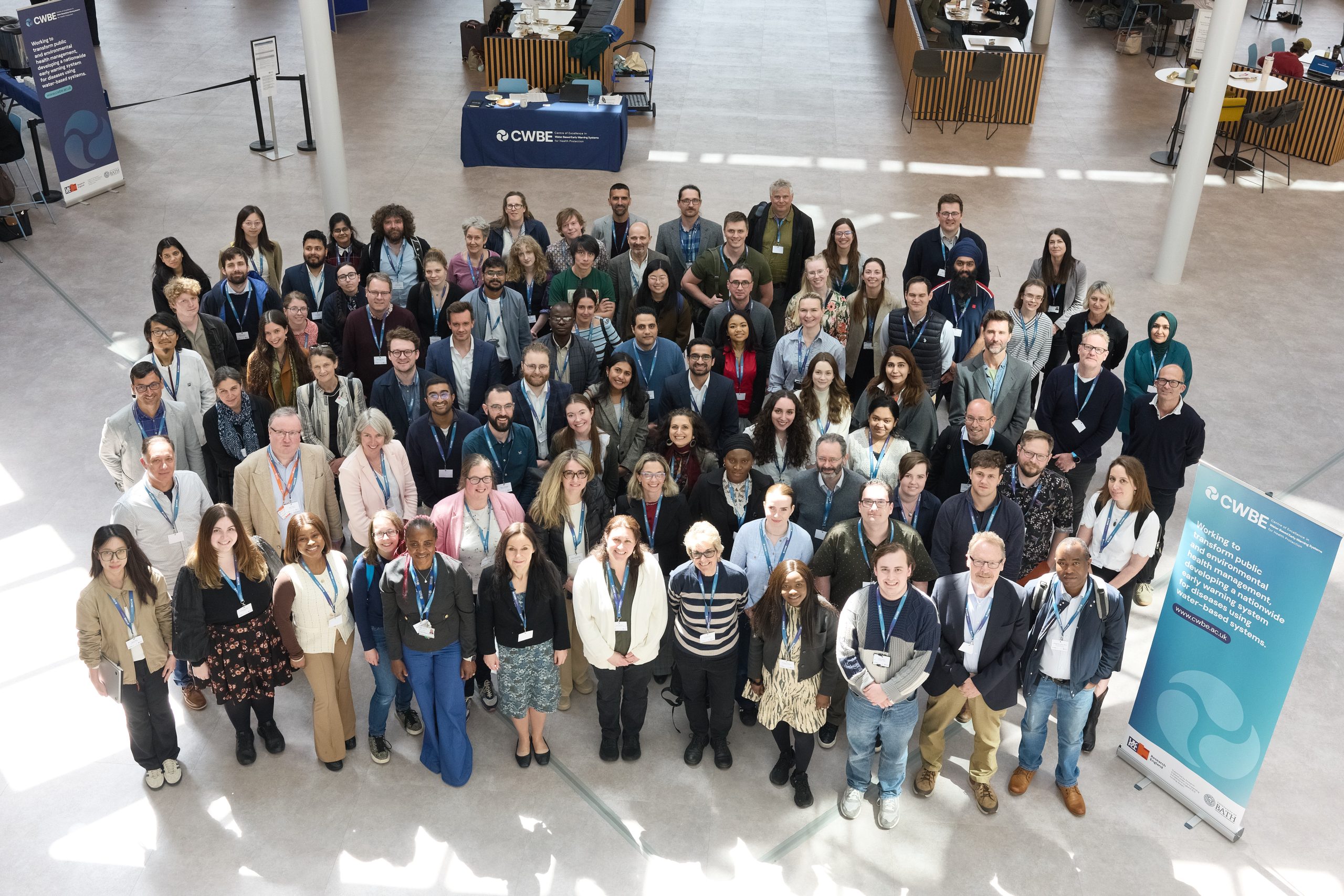
The CWBE Conference took place at the University of Bath on 6th May 2026.

 Events
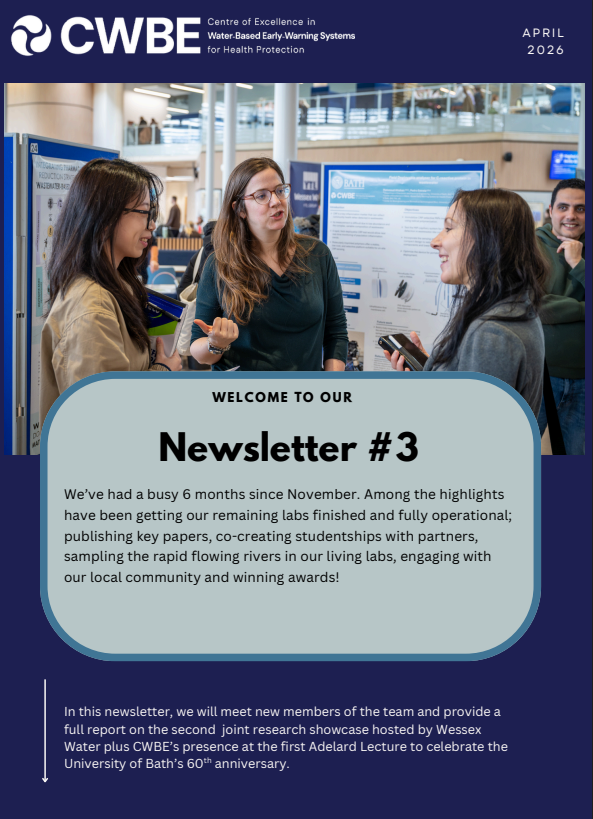
We recently held another Water Research Showcase, this time on campus, on 24th February 2026, in the School of Management Building (10 East), Level 0 foyer and room 0.08. We had even more posters and equipment on display and visitors to the event included undergraduates, post graduates and staff from across campus who came to talk to staff from Wessex Water and CWBE.
 News
News
Check out this article, featuring CWBE's Ed Feil's interview on wastewater health surveillance in the Financial Times.
 Blog
Blog
This past November, I joined several other PhD students and CWBE postdocs to take part in our seasonal river sampling campaign. We investigated the water quality of river Avon at two locations, near the Radstock wastewater treatment plant and another wastewater treatment plant near Paulton. This is done routinely to measure and monitor the health of the river.
 News
News
This study integrates high-resolution 2021 UK Census data, NHS patient registration records, and WWTP chemical parameters to refine population estimates and assess demographic influences on wastewater composition.
 News
News
CWBE is offering this fully funded PhD position which is open to applications until the start of the new year.

 News
News
CWBE was delighted to take part in a research showcase at Wessex Water's Operations Centre, in early September. The work on display highlighted the cutting-edge research and innovation aimed at tackling real-world environmental and public health challenges.
 News
News
CWBE's researchers, alongside other colleagues at Bath, Bangor University, Arup and Verily, have published a new paper on the movement of biological (genetic viral, fungal or bacterial) and chemical indicators (BCIs) within sewer networks. This is critical to wastewater-based epidemiology (WBE) enabling accurate calculation of chemical and pathogen loads within a community.
You want to help or join us? Either way let’s get in touch!
Get in touch
