

April 27, 2026
NewsPhD opportunity – Near-Source Sensing of Chemical and Pathogen Markers in Wastewater
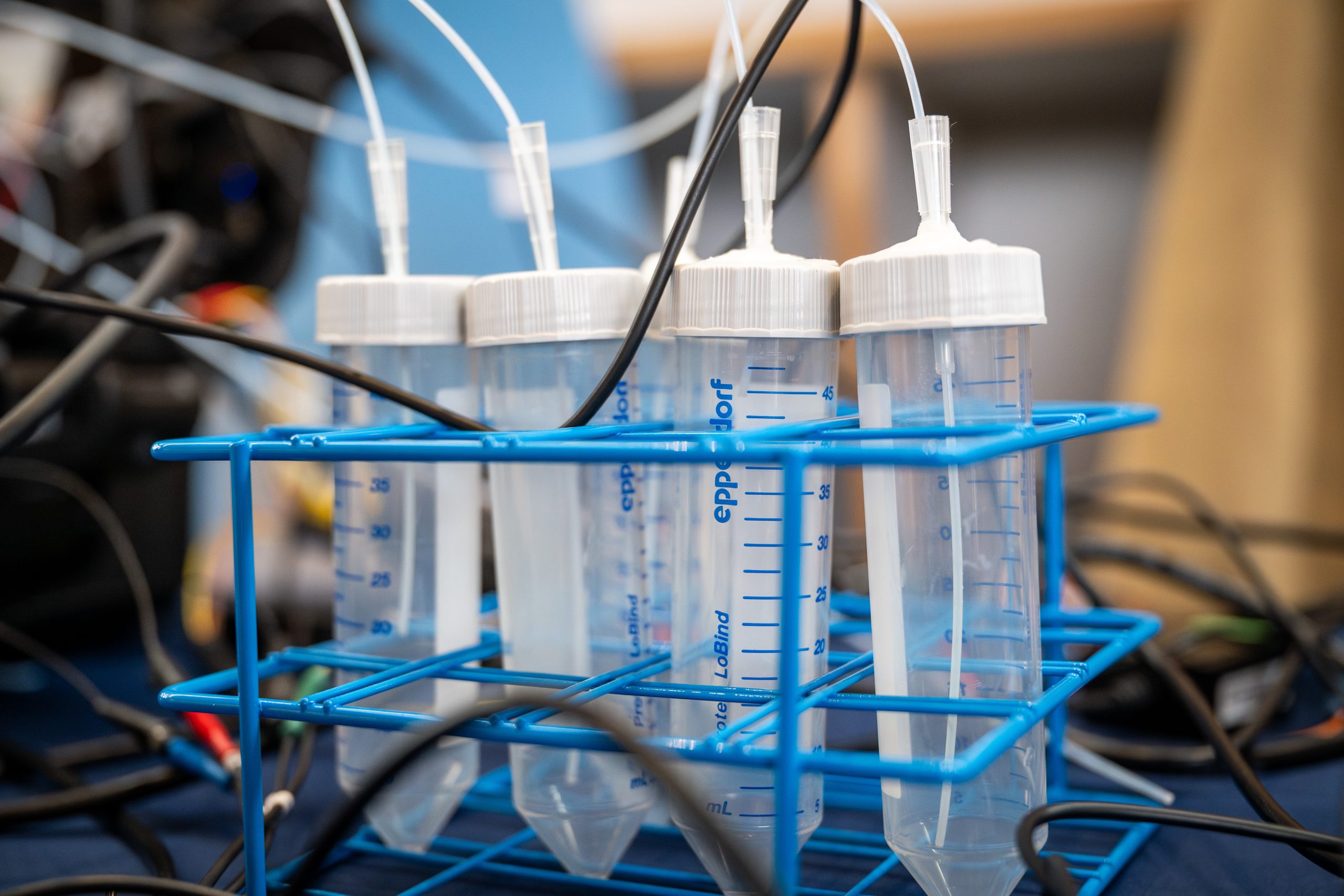
Water-based epidemiology requires wide-scope sampling and sensing devices for near real time pathogen and chemicals tracking both at wastewater treatment plants as well as at near-source locations (e.g. prisons, universities, health centres, hospitals and care homes, schools and colleges).
Some key research questions that still need to be addressed include:
1. Can samples be collected near source using existing wastewater infrastructure securely and safely?
2. What can we detect using a range of membrane sensors and separators in a single sampling system?
Current state of the art in (waste) water sampling is highly sporadic and dependent on other factors including flow rate (FR), temperature (T), electrical conductivity (EC), dissolved Oxygen (DO) and pH that are difficult to ascertain concurrently with the water sample taken. The novelty of combining multiple environmental sensors (T, EC, DO, pH), with pathogens, flow rate and turbidity will provide a unique fingerprint of water quality relating to public health, with geo-tagged samples and temporal data.
The project objective is to devise a combined water sampling and sensing system able to be deployed in a range of locations including outlets, pipes and water courses, with regular local samples taken for further analysis in the lab. The system hardware would be targeted close to the source such a hospital ward, or sector of a building to allow easy access and close linkage to the source demographics and use cases. The hardware will be designed to integrate with existing waste water infrastructure such as standard downpipes, with hygienic and secure sampling and sensing interfaces. The hardware will have a small outlet attached to the main waste water pipe to filter out debris prior to sensing and sampling, and to ensure that the sensors can operate with minimal intervention.
The membrane sensors will be based on specific biomarker capture materials such as polymers (e.g. to extract in-situ chemical markers such as illicit drugs, pharmaceuticals and disease biomarkers) that are tuned to identify specific chemical and pathogen. These will be combined with a separation system also deployed and validated in a real world environment.
More information and how to apply.
Written by
helena
April 27, 2026


